Container unloading and palletizing is the warehouse workflow that turns inbound container freight into shipment-ready pallets for LTL, truckload, local delivery, or final-mile freight. After a container or trailer arrives, the warehouse receives the load, unloads cartons or pallets, checks basic shipment information, sorts cargo by destination or order, palletizes and wraps freight when needed, stages outbound loads, and coordinates the next move. ShipMay helps importers, warehouses, freight forwarders, e-commerce sellers, and project cargo teams connect these post-arrival steps into one U.S. inland freight workflow.
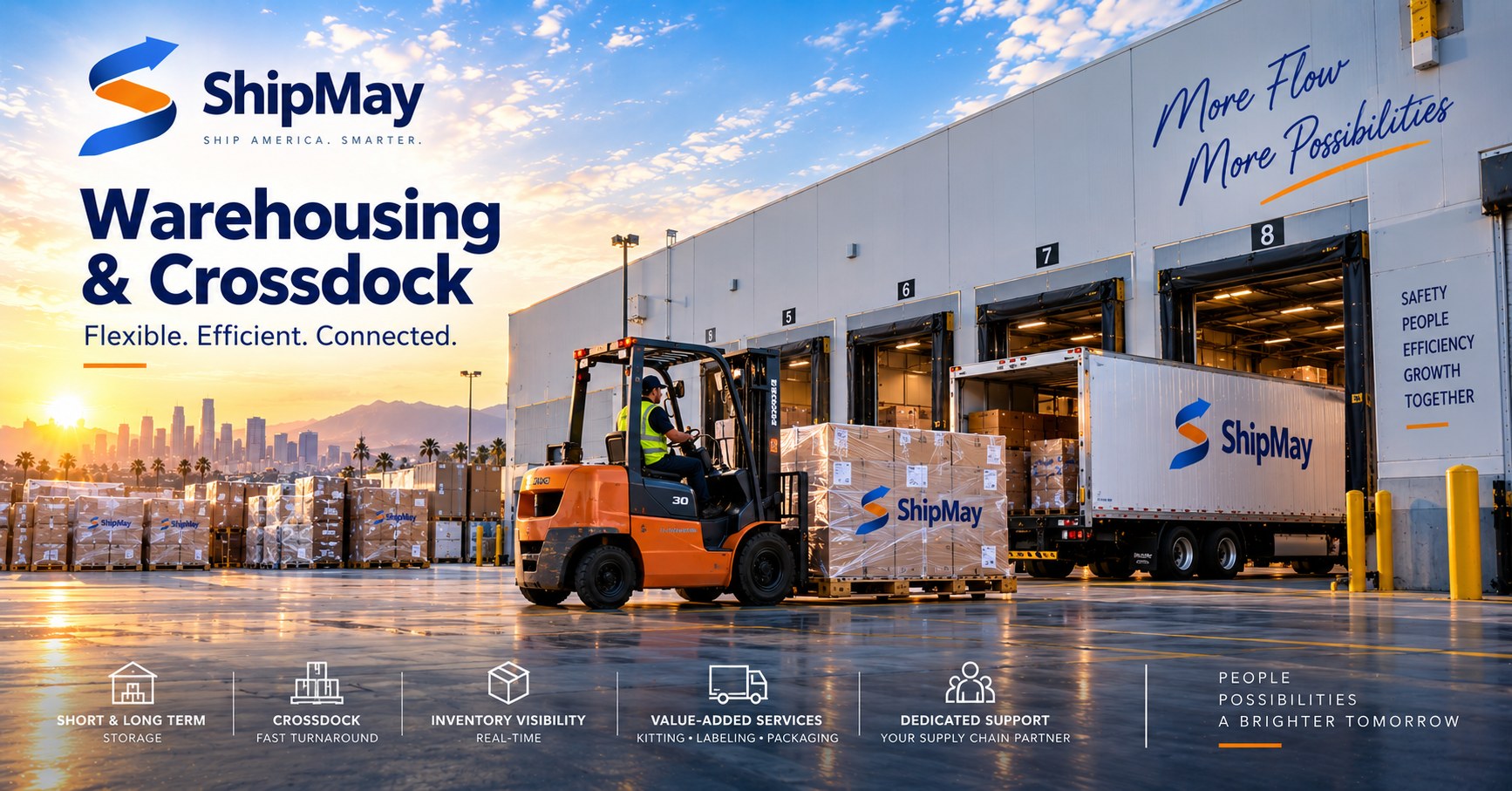
What happens after a container arrives at a U.S. warehouse?
Once a container or trailer reaches a warehouse, the freight still needs several operational steps before it can move to the final destination. Common steps include:
- Dock appointment confirmation
- Container or trailer check-in
- Unloading cartons, pallets, or floor-loaded freight
- Counting and basic receiving notes
- Sorting by SKU, order, destination, or service type
- Palletizing, wrapping, labeling, or staging freight
- Planning the outbound move by LTL, truckload, local delivery, or final-mile carrier
This is why post-arrival coordination is just as important as the port pickup itself.
Container unloading: floor-loaded vs palletized freight
A floor-loaded container usually takes more labor and more planning than a palletized shipment. The warehouse may need to unload cartons manually, separate SKUs, inspect visible damage, and rebuild freight onto pallets. Palletized freight is usually faster to receive, but the warehouse still needs to confirm pallet count, dimensions, weight, and downstream delivery requirements.
| Freight type | Typical warehouse work | Quote information needed |
|---|---|---|
| Floor-loaded cartons | Manual unloading, sorting, palletizing | Carton count, SKU count, photos, cargo weight |
| Palletized freight | Forklift unload, count, stage | Pallet count, dimensions, weight |
| Mixed-SKU container | Sort by SKU/order/destination | SKU list, labels, receiving rules |
| Oversize or heavy cargo | Special equipment and planning | Dimensions, weight, photos, lift requirements |
Palletizing, wrapping, and staging
Palletizing prepares freight for safer and more predictable domestic transportation. A good palletizing plan should define:
- Pallet size and height limit
- Whether cartons can be stacked or must stay upright
- Whether freight needs stretch wrap, corner boards, straps, or labels
- Whether pallets are going to one destination or multiple destinations
- Whether the shipment will move by LTL, FTL, local delivery, or final-mile freight
Choosing the next move: LTL, truckload, local delivery, or final mile
After freight is received and prepared, the next move depends on shipment size, timing, destination, and delivery requirements.
- Use LTL when freight is palletized and does not require a full trailer.
- Use truckload when freight volume, timing, or security requires a dedicated trailer.
- Use local delivery for short-distance warehouse-to-customer moves.
- Use final-mile freight when delivery requirements involve appointment scheduling, limited access, residential, or site-specific coordination.
ShipMay supports drayage, transloading, LTL, truckload, intermodal, local delivery, and final-mile freight workflows.
What to prepare before requesting a quote
Before requesting a warehouse handling or outbound freight quote, prepare:
- Origin and destination
- Container, trailer, or warehouse location
- Commodity
- Carton count, pallet count, or SKU count
- Weight and dimensions
- Photos of freight if available
- Palletizing or labeling requirements
- Pickup and delivery appointment requirements
- Any special handling needs
Need help planning the next move after your container or warehouse receiving process? Prepare your origin, destination, commodity, weight, dimensions, pallet count, and warehouse requirements, then start a quote with ShipMay.
Related resources
- Transload & Container Deconsolidation
- Warehouse Transloading & Palletizing
- Freight Platform for Warehouses & 3PLs
- LTL Freight Quotes & Multi-Carrier Rating
- Truckload Freight Quotes, Solo & Team
- Your Cargo Arrived in the US — What Next?
- Truck Loading Planner
- Drayage vs Transloading: What Happens After a Container Arrives?
- Post-Arrival Delivery: Moving Freight from Port or Warehouse to Final Destination
- Los Angeles Drayage Guide: Port Pickup, Warehouse Delivery, and Common Delays
- LTL Freight Quote Checklist
- Freight Accessorial Charges Explained