Drayage is the short-haul movement of a container from a port, rail ramp, or terminal to a warehouse, yard, or delivery location. Transloading is the process of unloading freight from an ocean container or trailer and preparing it for the next domestic move, such as LTL, truckload, local delivery, intermodal, or final-mile freight. After a container arrives in the U.S., many importers use both: drayage first to move the container from the port, then transloading to unload, sort, palletize, and dispatch freight to the final destination. ShipMay helps teams coordinate these post-arrival steps in one connected U.S. inland freight workflow.
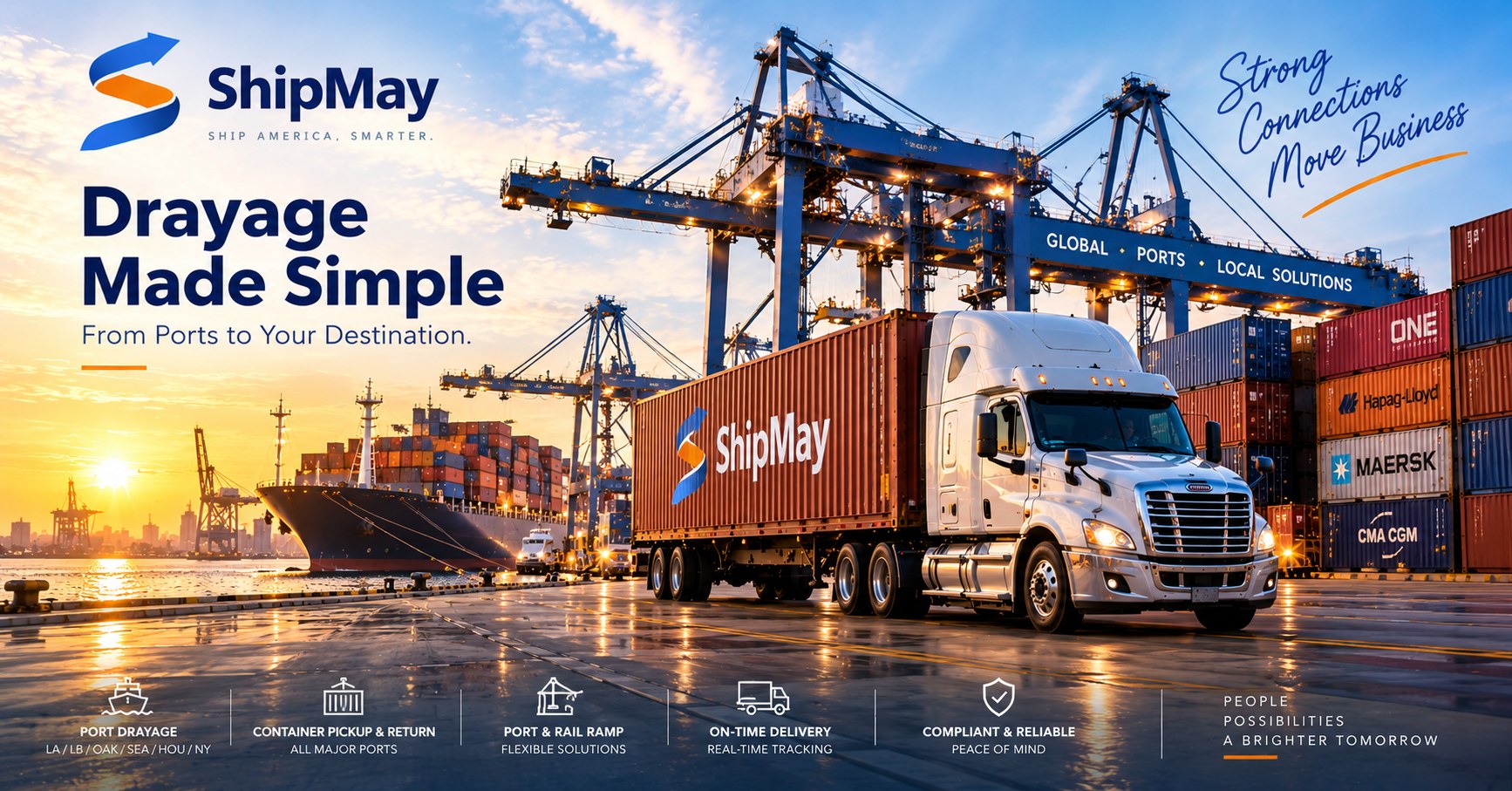
What is drayage?
Drayage is the container pickup and short-distance trucking move that connects a port, rail ramp, or terminal to the next inland location. In import logistics, drayage usually means moving an ocean container from the terminal to a warehouse, CFS, distribution center, transload facility, or sometimes directly to a consignee.
Drayage planning often depends on:
- Container availability
- Terminal appointment rules
- Free time and demurrage risk
- Chassis availability
- Container size and weight
- Warehouse receiving appointment
- Return location and empty return deadline
Drayage is not only a trucking move. It is a time-sensitive coordination step between terminal rules, carrier availability, warehouse capacity, and container return requirements.
What is transloading?
Transloading means unloading freight from one transportation unit and preparing it for another transportation mode or domestic delivery network. For imports, this often means unloading cargo from an ocean container at a warehouse or CFS, then rebuilding the freight into pallets, cartons, or shipment groups for the next leg.
Common transloading work includes:
- Unloading floor-loaded cartons or palletized freight
- Sorting by SKU, order, customer, or destination
- Palletizing, wrapping, labeling, or staging
- Consolidating or splitting freight
- Preparing LTL, FTL, local delivery, or final-mile shipments
- Coordinating outbound pickup appointments
For warehouse-specific steps, see ShipMay's guide to container unloading and palletizing.
Drayage vs transloading: the practical difference
| Question | Drayage | Transloading |
|---|---|---|
| What does it move? | Usually the container itself | The freight inside the container |
| Where does it happen? | Port/rail ramp to warehouse or destination | Warehouse, CFS, or transload facility |
| Main goal | Move the container inland and return it on time | Prepare freight for domestic delivery |
| Common risk | Demurrage, detention, appointment delay, chassis issue | Labor delay, sorting error, palletizing issue, outbound delay |
| Needed information | Terminal, container number, pickup appointment, delivery address | Carton count, SKU count, pallet requirements, destination plan |
The simplest way to think about it:
- Drayage moves the box.
- Transloading handles the goods inside the box.
In many real shipments, both are needed.
When do you need drayage only?
You may only need drayage when the container can move directly from the terminal to a receiver that can unload it and handle the empty return. This often works when:
- The consignee has dock space and unloading capacity
- The shipment is going to one destination
- The receiver can unload within the allowed free time
- The container can be returned on schedule
- No sorting, palletizing, or redistribution is needed
However, even a direct drayage move still needs careful appointment planning.
When do you need transloading?
Transloading is usually helpful when freight needs to be split, palletized, sorted, stored, or re-dispatched after arrival. It is common when:
- A container contains multiple SKUs or multiple customers' cargo
- Freight needs to be converted from floor-loaded cartons to pallets
- Goods need to move by LTL or truckload after unloading
- The final destination cannot receive a full container
- Freight needs to be staged before delivery
- The importer wants to reduce storage risk or coordinate multiple outbound shipments
Transloading often makes the domestic leg easier to manage, especially for e-commerce, warehouse, and multi-destination shipments.
What information should you prepare?
Before requesting a drayage or transload quote, prepare as much of the following as possible:
For drayage
- Port, terminal, or rail ramp
- Container number, size, and weight
- Availability date
- Last free day
- Delivery address
- Warehouse appointment requirements
- Empty return location if known
For transloading
- Commodity
- Carton count, SKU count, or pallet count
- Weight and dimensions
- Photos if available
- Palletizing, wrapping, labeling, or sorting rules
- Final destinations
- Preferred outbound mode: LTL, truckload, local delivery, intermodal, or final mile
How ShipMay connects the workflow
ShipMay helps freight teams coordinate U.S. post-arrival workflows from container pickup to warehouse handling and final delivery. Instead of managing each handoff separately, teams can plan the move from port to warehouse, from unloading to palletizing, and from warehouse to domestic transportation in one connected process.
ShipMay supports:
- Drayage
- Transloading
- LTL freight
- Truckload freight
- Intermodal freight
- Local delivery
- Final-mile freight
- Project freight and heavy-haul coordination
Need help planning the next move after your container arrives? Prepare your port or terminal, container details, warehouse address, commodity, weight, dimensions, pallet count, and delivery requirements, then start a quote with ShipMay.
Related resources
- Drayage Services for U.S. Container Freight
- Transload & Container Deconsolidation
- Your Cargo Arrived in the US — What Next?
- Warehouse Transloading & Palletizing
- Los Angeles Drayage & Long Beach Port
- Container Unloading and Palletizing Guide for U.S. Warehouses
- LTL Freight Quotes & Multi-Carrier Rating
- Truckload Freight Quotes, Solo & Team
- Post-Arrival Delivery: Moving Freight from Port or Warehouse to Final Destination
- Los Angeles Drayage Guide: Port Pickup, Warehouse Delivery, and Common Delays
- LTL Freight Quote Checklist
- Freight Accessorial Charges Explained